
How ADHD Is Diagnosed: Signs in Children and Adults
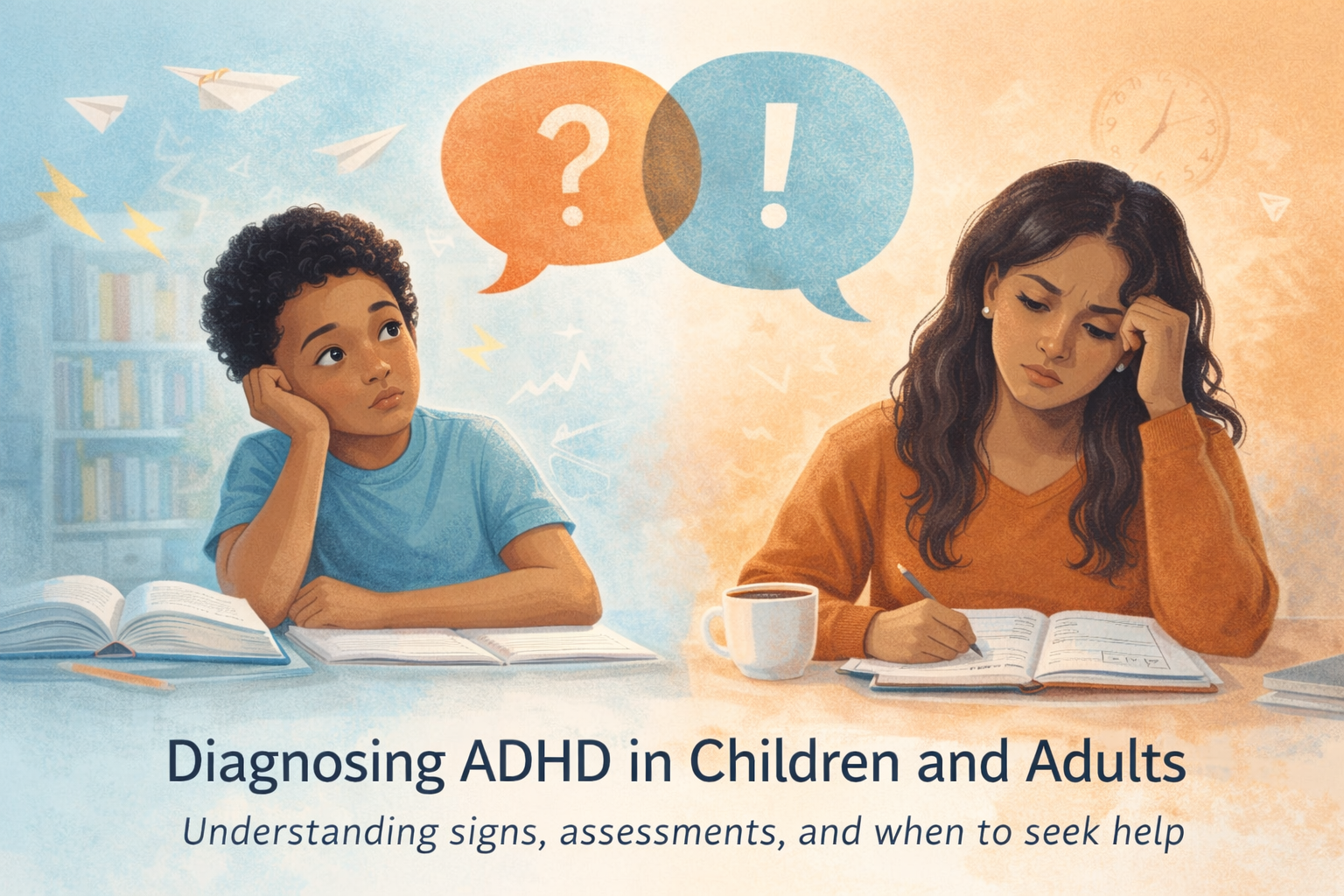
Many parents notice when their child seems more energetic, distracted, or impulsive than their peers. It’s natural to wonder whether these behaviors are simply part of development—or whether something more might be going on. One possibility that sometimes comes up in these conversations is Attention-Deficit/Hyperactivity Disorder (ADHD).
ADHD is one of the most commonly diagnosed neurodevelopmental conditions in children. However, it is important to know that ADHD is not only a childhood condition. Many people are also diagnosed as teenagers or adults after years of wondering why certain tasks, routines, or focus patterns felt more difficult than expected.
Understanding how ADHD is identified can help families and individuals feel more informed and supported when exploring these questions.
What Is ADHD?
ADHD is a neurodevelopmental condition that affects how the brain manages attention, impulse control, and activity levels. People with ADHD are not simply “unmotivated” or “not trying hard enough.” Their brains process attention and self-regulation differently.
ADHD generally appears in three forms:
Inattentive type – difficulty focusing, following instructions, or completing tasks
Hyperactive/impulsive type – high energy, impulsive actions, difficulty sitting still
Combined type – a mix of both attention and hyperactivity challenges
Every person with ADHD experiences it differently. Some may struggle primarily with attention and organization, while others experience more impulsivity or restlessness.
Signs That May Lead to an ADHD Assessment in Children
Children naturally have different personalities and energy levels, so occasional distraction or restlessness is normal. ADHD is usually considered when patterns are persistent, noticeable across multiple settings, and affecting daily life.
Parents and teachers may notice signs such as:
Difficulty sustaining attention on tasks or instructions
Frequent forgetfulness or losing items
Trouble completing schoolwork or routines
Impulsive behavior, such as interrupting others
Difficulty waiting their turn
Excessive movement or restlessness
Strong emotional reactions or frustration
These patterns typically appear in multiple environments, such as both school and home.
ADHD in Teens and Adults
Many people are not diagnosed with ADHD until adolescence or adulthood. This can happen for several reasons. Some children learn to compensate for attention differences early on, while others may have symptoms that become more noticeable when academic, work, or life demands increase.
Adults who pursue an ADHD assessment often describe lifelong patterns such as:
Difficulty staying organized or managing time
Frequently losing track of tasks or responsibilities
Struggling to focus on routine or repetitive work
Feeling mentally overwhelmed by planning or decision-making
Chronic procrastination despite strong intentions
Difficulty regulating emotions or stress
For many adults, receiving an ADHD diagnosis can bring a sense of relief and understanding. It can help explain patterns that previously felt confusing or frustrating.
Who Diagnoses ADHD?
ADHD is typically diagnosed by a qualified healthcare or mental health professional, such as:
Psychologists
Psychiatrists
Pediatricians
Developmental specialists
In some cases, a psychoeducational or psychological assessment may be recommended to better understand attention, executive functioning, and learning profiles.
What an ADHD Assessment Involves
ADHD diagnosis is not based on a single test. Instead, it involves gathering information from several sources to build a clear picture of how a person learns, behaves, and processes information.
An assessment may include:
Interviews and Developmental History
Parents or individuals share information about attention patterns, development, and daily functioning.
Input From Teachers or Partners
For children and adolescents, teachers often provide insights into classroom behavior. Adults may also provide examples from work or daily life.
Standardized Questionnaires
Structured rating scales help clinicians identify patterns related to attention, impulsivity, and executive functioning.
Cognitive or Learning Testing
Some assessments evaluate attention, memory, processing speed, and problem-solving skills.
This comprehensive process helps professionals determine whether ADHD is present or whether other factors may be influencing attention and behavior.
ADHD Often Overlaps With Other Learning Differences
ADHD can sometimes occur alongside other developmental or learning differences, such as:
Learning disabilities
Speech or language challenges
Anxiety
Executive functioning difficulties
This is one reason thorough assessments are valuable—they help families and individuals understand the full picture, not just a single diagnosis.
Diagnosis Is About Understanding, Not Labelling
For many families and adults, the idea of diagnosis can feel intimidating. In reality, an ADHD diagnosis is meant to provide clarity and guidance, not to define someone’s identity.
Understanding how the brain processes attention and regulation allows people to access tools and strategies that support success.
These supports may include:
School or workplace accommodations
Executive functioning coaching
Therapy or counseling
Parent or family support strategies
In some cases, medical consultation
Many people with ADHD are highly creative, curious, energetic, and capable when their strengths are supported.
When Should Someone Seek an ADHD Assessment?
It may be helpful to explore an ADHD assessment when:
Attention challenges interfere with school, work, or relationships
Teachers or colleagues consistently raise concerns about focus
Tasks feel significantly harder to organize or complete than expected
Daily routines become difficult to manage
Longstanding patterns of distraction or overwhelm persist
For both children and adults, seeking an assessment is simply a step toward understanding how the brain works—and how to support it more effectively.
Supporting Different Ways of Learning
Every brain works differently. When attention differences are understood and supported, children and adults alike can develop strong strategies, confidence, and self-awareness.
At Wonderstruck, we believe that understanding how someone learns is the first step toward helping them thrive.
